Swiss francs, cards, tipping, tax refunds: money in Geneva without nasty surprises
In Geneva, cards work almost everywhere, euros sometimes, and that is where you lose money without noticing. Should you withdraw francs, how do you avoid conversion at the terminal, what is tipping really worth in Switzerland, and how do you get the VAT back on a watch?
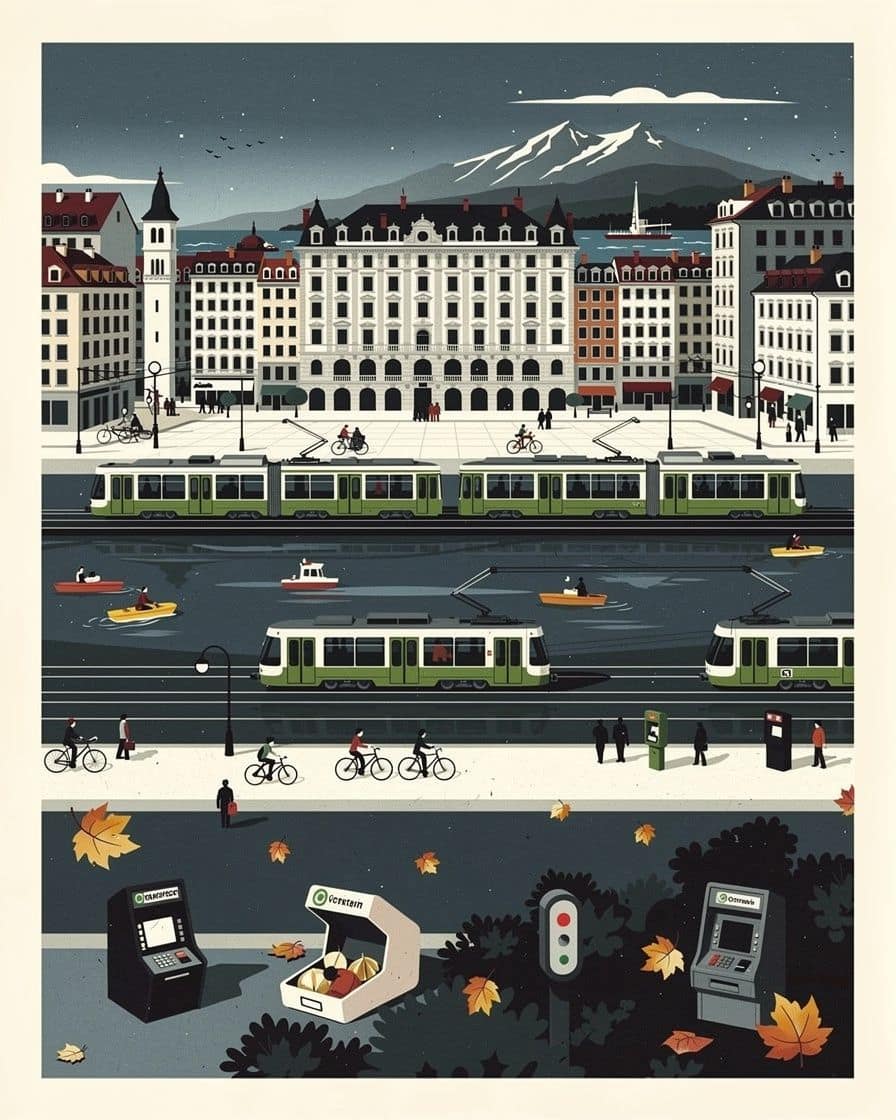
Geneva's currency is the Swiss franc, and bank cards are accepted almost everywhere. The risk is therefore not being unable to pay, but paying more than necessary: an unfavourable exchange rate in euros, a conversion offered by the terminal, withdrawal fees adding up.
Here is what to plan before you leave, how to pay on the spot, the real custom of tipping, VAT refunds on valuable purchases, and the pitfalls of parking and apps. For the overall cost of a stay, see the real budget in Geneva.
Do you need Swiss francs in Geneva?
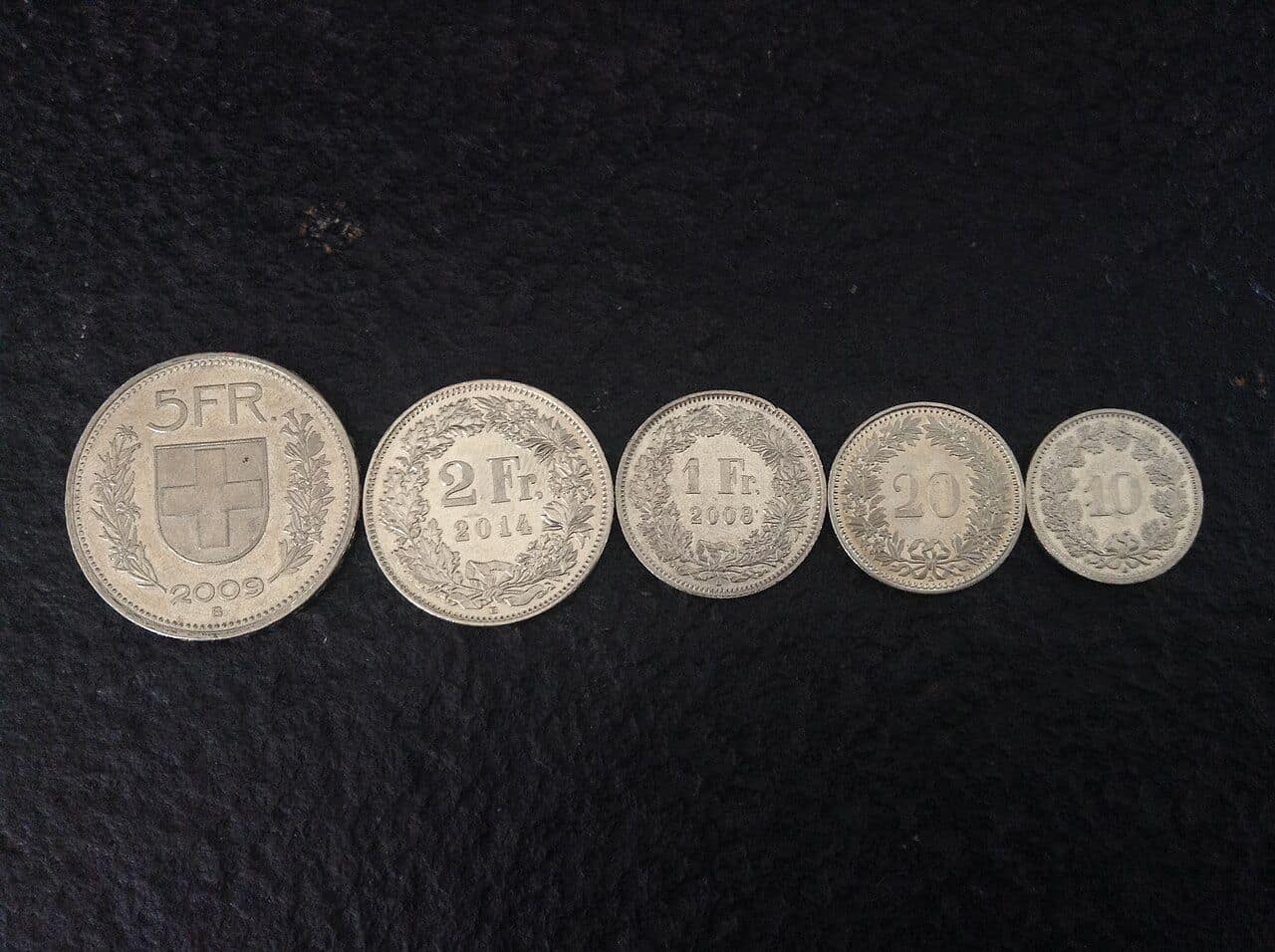
Photo: Exploratorium efimeros, CC BY-SA 4.0, via Wikimedia Commons
A little, not much. A card is the simplest solution for hotels, restaurants, shops and large purchases. Keep a reserve of 50 to 150 CHF in cash for markets, some taxis, small shops and the day a terminal breaks down. This range is a precaution, not official data.
Withdraw at a bank or a clearly identified cash machine. If the machine offers a "guaranteed" conversion into euros, decline it: your bank should do the converting, not the cash machine.
Checks to make with your bank
- the fee for withdrawals abroad, and any fixed charge per withdrawal;
- the exchange margin on payments in foreign currency;
- daily withdrawal and payment limits;
- strong authentication, which must work while roaming.
No common price list applies to all visitors: fees depend on the bank, the network and the cash machine. Visa and Mastercard are the most useful; American Express, prepaid cards and some mobile wallets are accepted unevenly.
Can you pay in euros in Geneva?
Sometimes, in tourist areas, but no shop is obliged to accept them. When they do, the rate is often less favourable than your bank's, and change is generally given in francs. No single rate is published: it varies by shop, day and payment method.
Before handing over a euro note, ask three questions:
- "What rate do you apply for euros?"
- "Will the change be given in Swiss francs?"
- "Will the terminal charge in CHF or EUR?"
Remember that one franc is worth roughly one euro, but not exactly, and the difference counts on a hotel bill or a watch.
Paying by card: how do you avoid conversion at the terminal?
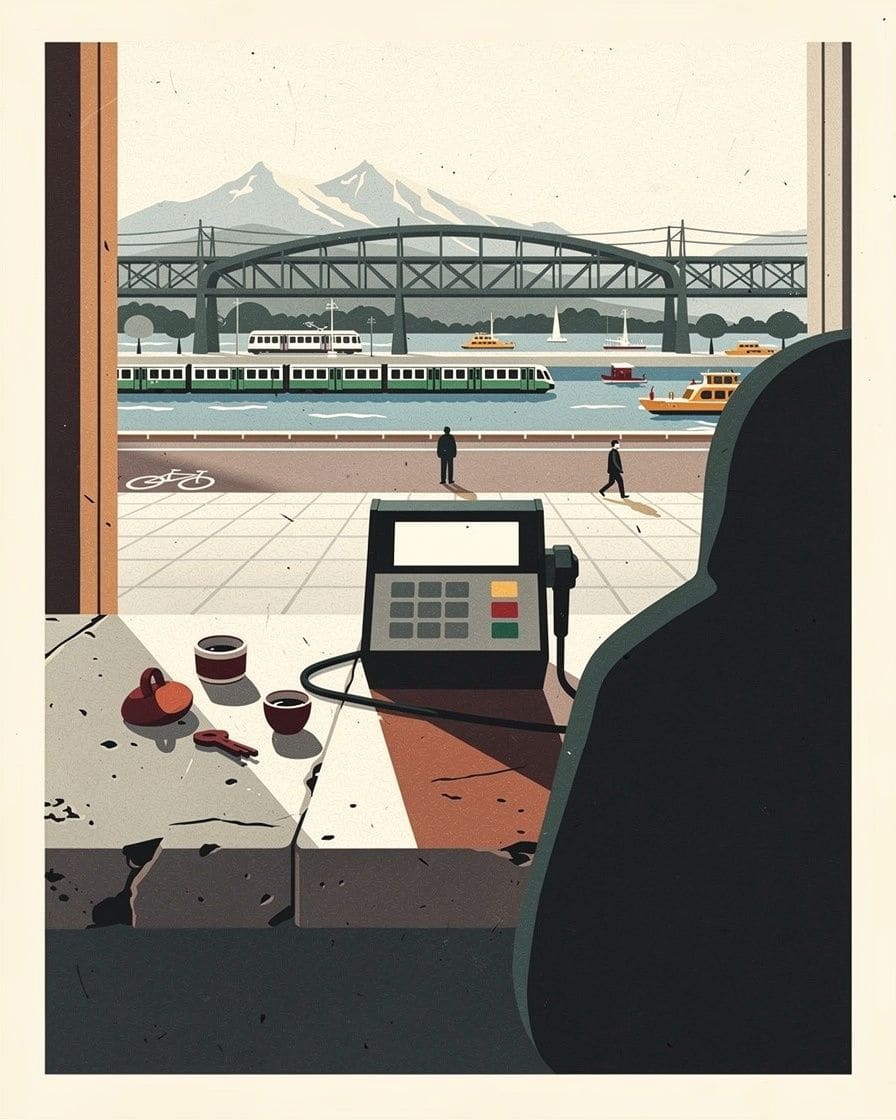
This is the costliest and most discreet trap. Some terminals offer to display and charge the amount in euros: this is dynamic currency conversion. It is reassuring, but often includes a higher exchange margin than your bank's.
The rule: always choose to be charged in CHF, unless your card applies a particularly bad rate. Check the screen before confirming, especially for a hotel or a watch purchase, where a few per cent means tens of francs.
Contactless may be blocked by your card's security limit: be ready to enter your PIN or confirm in your banking app. Some machines refuse foreign cards or require coins. So keep a physical card and a second means of payment: a flat phone makes mobile payment useless.
Should you leave a tip in Switzerland?
It is not an obligation. Service is generally included in Swiss prices, and a tip remains a sign of satisfaction, not a tax.
| Situation | Reasonable practice |
|---|---|
| Coffee or small order | round up to the next franc |
| Restaurant, satisfactory service | round up or add a few francs |
| Exceptional service | more, with no expected percentage |
| Taxi | round up or leave a small amount |
| Hotel | optional, depending on the service |
No official source sets a percentage. Guides recommending 10 or 15% describe a possible practice, not a Swiss rule. When a terminal shows a tip screen, you can choose zero: do not confuse it with a service charge, which is already included. Table manners are covered in where to eat in Geneva.
A hotel with no surprises. Tourist tax, breakfast, parking: compare the total price in francs before booking, and choose to be charged in CHF on arrival. This link opens Geneva hotels for the coming weekend.
See hotels in Geneva →Partner link: booking through this link supports the site at no extra cost to you.How do you get the VAT back on a purchase?
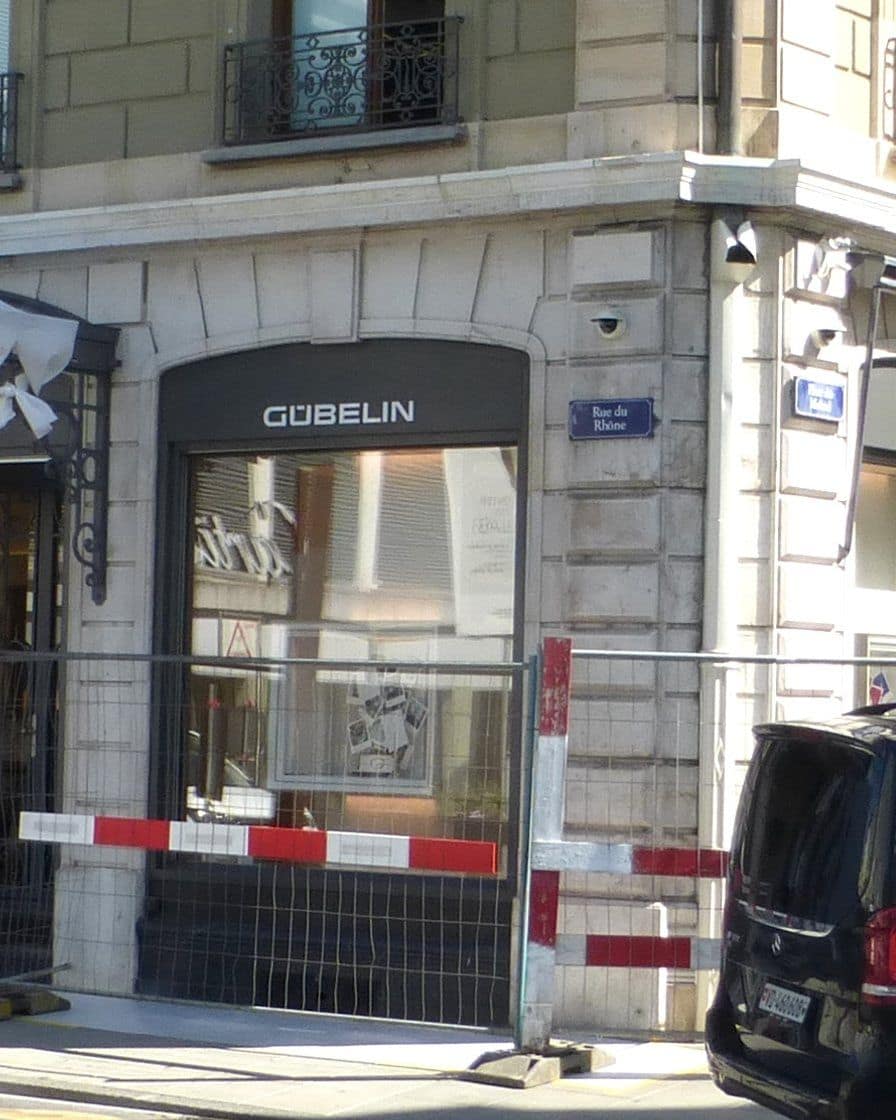
Photo: MHM55, CC BY-SA 4.0, via Wikimedia Commons
Switzerland applies a federal VAT, and people living abroad can have it refunded on goods they export. But the refund is not automatic, and its minimum purchase threshold is not in our sources: we will not make it up. Ask the seller or the Federal Office for Customs before buying.
The procedure, step by step
- ask the retailer for the tax refund form or receipt at the time of purchase;
- present the goods, the invoice and the document to customs when leaving Switzerland;
- have the export stamped before leaving Swiss customs territory;
- send the stamped form back to the retailer or the tax refund operator;
- wait for the refund, reduced by processing fees.
The refund does not always match the full VAT shown: operators take their fees. For a watch, ask the seller for the price including VAT, the refundable amount, the fees, the office where you get the stamp depending on how you leave, by the airport, by road or via France, and the refund time.
And at the French border?
The Swiss tax refund does not remove import obligations in your own country. On entering Switzerland, the duty-free value allowance is 300 CHF per person per day according to the customs' general page, 150 CHF according to a 2026 fact sheet. On the way home, it is French customs that apply to your watch. Details are in Geneva from France and watchmaking in Geneva.
How do you pay for parking and transport?
Geneva's parking meters accept bank cards, Twint and mobile operators listed on the Fondation des Parkings website. Nothing guarantees that every app works with a foreign phone number or card: keep some coins or a physical card.
At the airport, the P26 car park costs 132 CHF for a week and 237 CHF for two weeks, and 30 to 38 CHF a day depending on the category. Drop-off is free for 5 minutes, then 5 CHF an hour. Pay before going back to your car, ticket in hand (Geneva Airport).
Two little-known rates: motorbike parking costs CHF 1 for 3 hours in more than 60 of the Fondation's car parks, and the secure bike stations are free for 24 hours, 2 CHF a day for a special bike. Parking in general is not free, as detailed in parking in Geneva.
For the motorway, the Swiss vignette costs 40 CHF as soon as your route uses a motorway or expressway. On public transport, your hotel's Geneva Transport Card makes everything free in the canton (Geneva's passes); otherwise, tickets are covered in getting around Geneva.
Which scams and nasty surprises should you avoid?
- Conversion into euros presented as a service, with a high margin.
- Fake bureaux de change, or a rate displayed with no visible commission.
- The fake QR code stuck on a parking meter, leading to a fraudulent payment.
- Tipping presented as compulsory: it is not.
- Tax refund fees not explained at the time of purchase.
- A vignette bought from a reseller who adds their own fees.
- A transport ticket for the wrong zone between the Geneva zone and cross-border journeys.
- Resold fair tickets and badges: for Watches and Wonders, only official channels are safe.
Behind the wheel, also beware of GPS directions into a pedestrian street or one reserved for residents, deliveries or taxis: the fine and the pound cost far more than the car park. A car registered in France does not have the permits of a Geneva vehicle.
Sundays and public holidays: where can you pay and withdraw cash?
On Sundays and public holidays, many Geneva shops and counters close, while restaurants, hotels, stations, the airport and some museums keep special hours. A closed bureau de change or transport counter is the day your cash reserve and physical card come in handy.
Note that Geneva's public holidays are not the same as the rest of Switzerland's: the Jeûne genevois, for example, is specific to the canton, and its date changes every year. Check the cantonal list before a stay, especially if you plan to shop or claim a tax refund that day.
What should you prepare before leaving?
- your banking app and strong authentication, tested while roaming;
- a backup physical bank card, and a few francs in cash;
- tickets or bookings, especially for a fair, on your phone and offline;
- tax refund documents if you are planning a valuable purchase;
- the hotel address as an offline screenshot, and a car park identified if you are driving.
Staying in France means paying for every journey, but in euros for the night: the comparison is in staying on the French side. If you are driving, the vignette and the border are covered in how to get to Geneva.
What does Watches and Wonders change for your money?
The week of the fair concentrates valuable purchases: that is when conversion at the terminal, tax refunds and customs on the way home weigh the most. A watch almost always exceeds the allowance: keep the invoice, pay in francs, and have the tax refund stamped before leaving Switzerland.
Tickets and badges are sold only through official channels; offers of "guaranteed" access may be invalid. The fair's programme is in our Watches and Wonders guide.
Coming for Watches and Wonders: the week of the fair is the most expensive of the year, and a cancellable rate paid in francs avoids two nasty surprises. This link opens Geneva hotels for the dates of the fair.
See hotels for the fair dates →Or the public weekend, from 9 April 2027 →Partner link: booking through this link supports the site at no extra cost to you.Sources
Sources: Geneva Airport (car park prices and access; 2026 car park regulations), tpg (unireso passes), Fondation des Parkings (motorbike and bike station offers, payment methods, 2026 P+R conditions), Federal Office for Customs and Border Security (allowances, via our border page), Ibani (transport in the Geneva region, vignette).
The Swiss tax refund threshold, its 2026 form and customs office hours are not in our sources. The exchange rates used by shops are not published. Research carried out on 22 October 2026.
Frequently asked questions
Can you pay in euros in Geneva?
Should you withdraw Swiss francs before going to Geneva?
Should you leave a tip in Switzerland?
How do you get a VAT refund on a watch bought in Geneva?
Is it better to pay in CHF or in euros with your card?

Sandrine Maret
Sandrine spent six years on the front desk of a hotel near Cornavin station, answering the same questions every day about the tram, fare zones and the border. She writes the pages she would have liked to hand to her guests. She checks every price with the operator, never in a guidebook.