The Fête de l'Escalade in Geneva: 2026 dates, procession, race and chocolate marmite
Every December, Geneva celebrates a night in 1602 when it drove back the troops of Savoy. A costumed procession through the Old Town, a popular race, and a chocolate marmite smashed as a family. The 2026 dates, what is free, when to come, and what the legend embellishes.
The Escalade is the festival Genevans love most, and the one visitors know least. It commemorates the night of 11 to 12 December 1602, when the troops of the Duke of Savoy tried to scale the city walls, and were driven back.
For anyone coming to Geneva in December, it shows a completely different face from fine watchmaking: cobbled streets, historical costumes, brass bands, a popular race and a chocolate marmite. Here are the 2026 dates, the programme, what is free, and the history untangled from its legend.
What are the dates of the 2026 Escalade?
| Event | 2026 date | Times | Place |
|---|---|---|---|
| Course de l'Escalade, 48th edition | On 5 and 6 December 2026 | Saturday 10am to 11pm, Sunday 9am to 6pm | Old Town, Parc des Bastions |
| Fête de l'Escalade | From 11 to 13 December 2026 | Friday 6pm to 8pm, Saturday and Sunday 10am to 6pm | Old Town, Bastions |
| Grand historical procession | Sunday 13 December 2026 | departure around 5pm according to an unofficial source | Old Town |
The public festival takes place on the weekend closest to 11 and 12 December, and the race can be run the weekend before, as in 2026. The race times are those of the general programme published by Geneva Tourism; the organisers do not publish all the procession times.
Do not look for the precise calendar of the 2023 to 2025 editions: the pattern is documented, festival around 12 December and procession on the Sunday, but not each year's times. We will not reconstruct them.
What happens during the festival?
The Grand historical procession
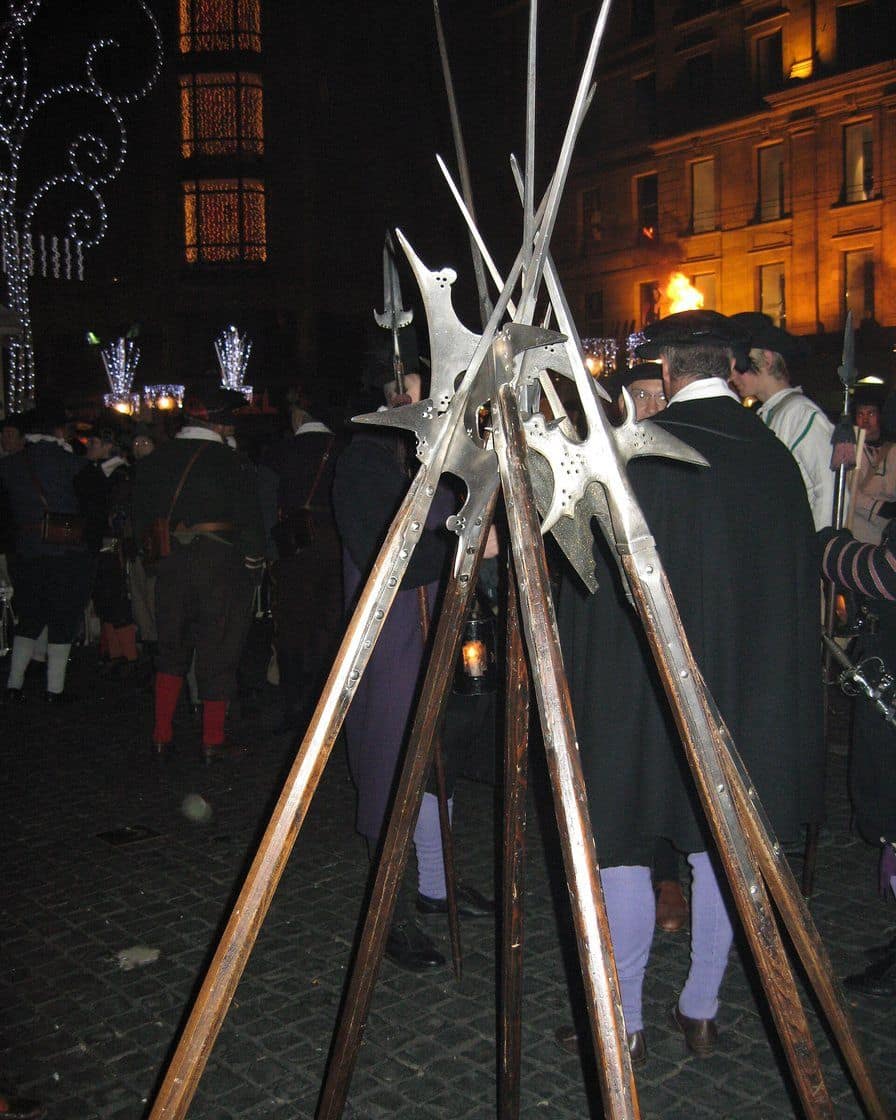
Photo: AbrahamdeBaptista, CC BY-SA 3.0, via Wikimedia Commons
This is the most spectacular moment, on Sunday evening: participants in costume, troops, characters from 1602, music and torches cross the Old Town, evoking the defence of the city. Watching from the street is free.
The procession fills the streets along its route. Come very early to choose a spot, or avoid the hill that evening if you are not attending: getting around becomes difficult, and access to shops and restaurants may be disrupted.
Street events
According to tourist sources, the procession, the bonfires, the street events and the musical displays are free. No exhaustive list of side events is published, nor the policy of each museum or restaurant on those days. The districts involved are those of the Old Town, around St Pierre Cathedral and the Parc des Bastions.
The Course de l'Escalade: how do you take part?
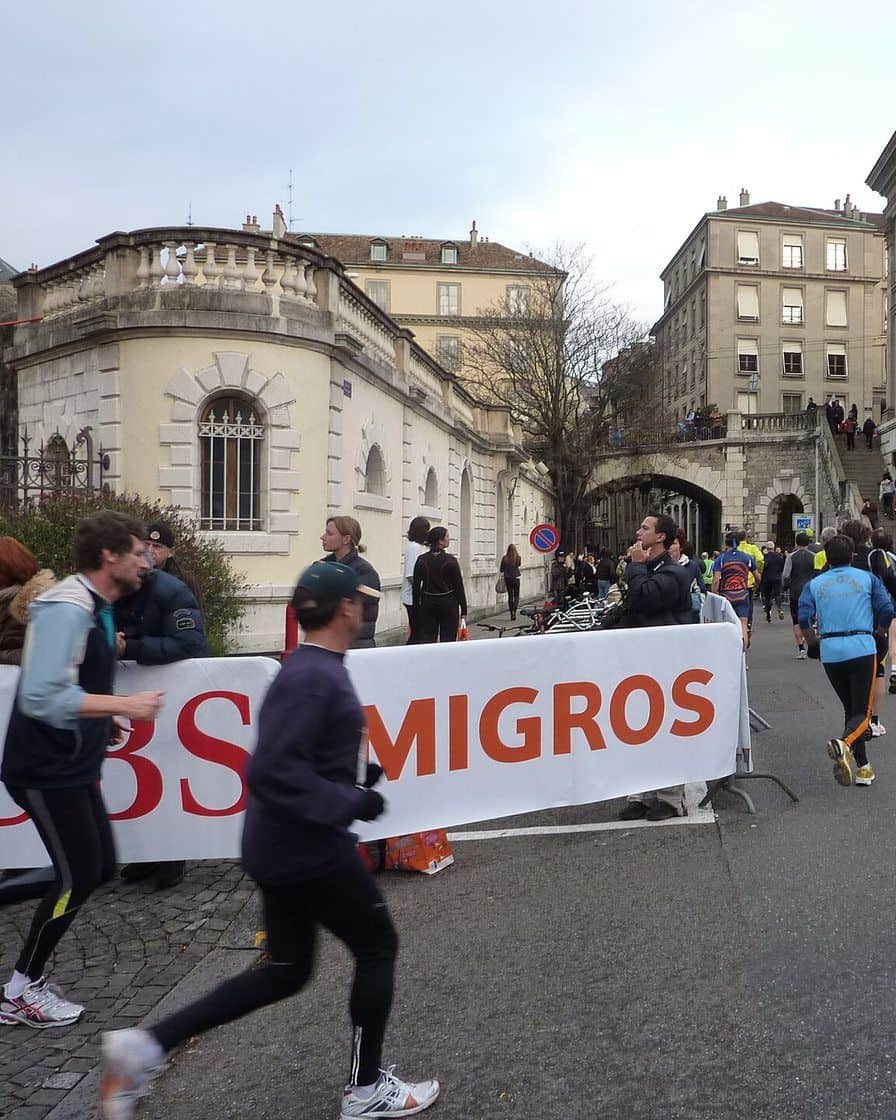
Photo: Erdrokan, CC BY-SA 3.0, via Wikimedia Commons
It is a separate sporting event, a popular race through the Old Town and around the Bastions, linked to the Escalade season. The 48th edition is run on 5 and 6 December 2026.
Entry costs 42 CHF for an adult and 26 CHF for a child, according to the official page. The deadline, any fees, the full categories and bib collection are not in our sources: check them on the organiser's form.
This is the main paid part of the Escalade. For spectators, watching the race is free, and the steep lanes of the hill make it as much a show as a test.
Where does the Escalade come from?
On the night of 11 to 12 December 1602, the troops of the Duke of Savoy, more than 2,000 men according to the inventory of living traditions, tried to cross the fortifications using ladders. The attack was driven back by the inhabitants and the Genevan forces. The festival takes its name from those ladders: the escalade, or scaling, of the ramparts.
The commemoration began as early as 1603. It celebrates the victory of a small Protestant city over a neighbouring Catholic power, and that is what sets it apart from a simple winter market or a military re-enactment: a civic, political and family ritual.
Mère Royaume, between history and legend
The traditional story features Mère Royaume, generally identified as Catherine Cheynel. She is said to have poured a cauldron of boiling soup over an attacker, then raised the alarm. The City of Geneva makes her the central figure of the Escalade's memory.
The heroic version has partly been mythologised. Swissinfo points out that Catherine Cheynel was not necessarily the one who raised the alarm: she was one of the inhabitants who took part in the defence. The marmite became the simplified symbol of a collective mobilisation.
The chocolate marmite: what is the tradition?
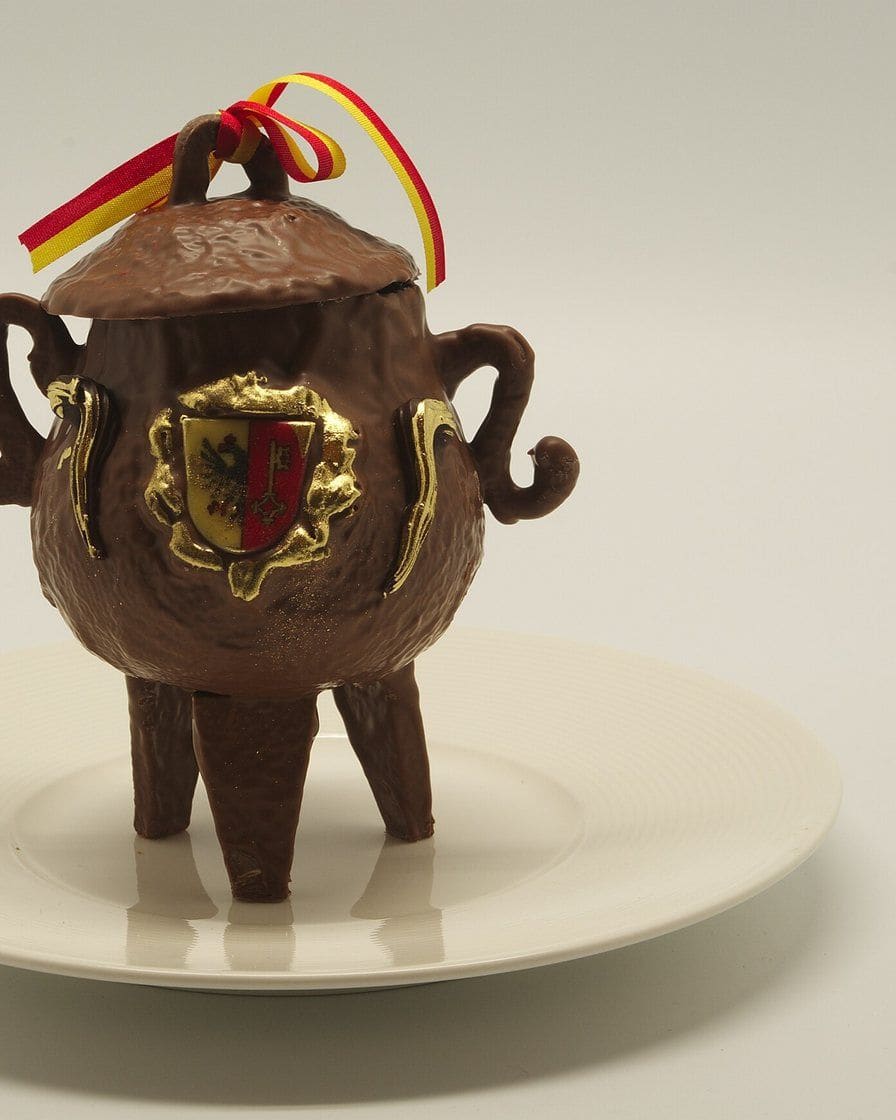
Photo: Clément Bucco-Lechat, CC BY-SA 3.0, via Wikimedia Commons
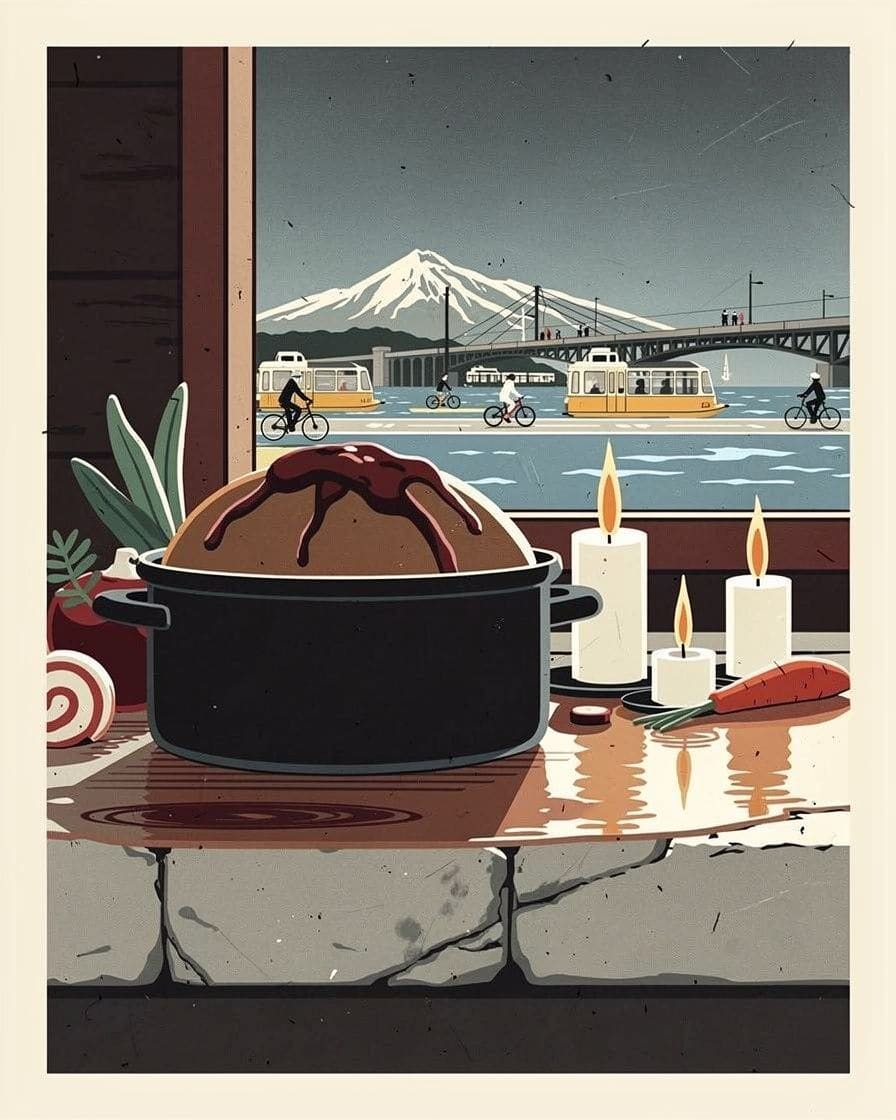
It does not go back to 1602. The City of Geneva dates the first commemorative sale to 1881. The marmite is made of chocolate and filled with marzipan sweets shaped like vegetables, a reminder of Mère Royaume's soup.
It is smashed with the family, at school or at gatherings, with the cry "Ainsi périssent les ennemis de la République!" ("Thus perish the enemies of the Republic!"). The wording and customs vary between groups; the sources mainly document the object and its origin.
How much does a marmite cost? It depends on the weight, the chocolatier and the finish, and no reference price is published. We will not give an invented average price: compare in shop windows, as the chocolate shops in the centre display them all through December.
Chocolate and the Old Town in December. Guided tours of the hill, chocolate tastings and winter outings: our partner's Geneva page brings together the activities available during the Escalade season.
See activities in Geneva →Partner link: booking through this link supports the site at no extra cost to you.When should you come to enjoy it, and when should you avoid the crowds?
No crowd curve is published: here are our pointers, drawn from the programme.
- Race Saturday morning: the Bastions area is still breathable.
- Saturday afternoon and evening: very busy around the race and along the routes on the hill, with the programme running until 11pm. Agree on a meeting point.
- Sunday morning: activity from 9am, an acceptable window before the peak.
- Procession Sunday, around 5pm: the peak. Come very early to see it, or leave the Old Town beforehand.
The best compromise for seeing without suffering: arrive in the morning, scout the route before the streets close, then move away. For the most authentic experience, on the other hand, accept the Sunday evening crowds.
The Escalade weekend, from 11 to 13 December 2026, falls in the middle of the Christmas market on the quays. This link opens Geneva hotels for those dates; addresses in the Old Town and the Rues-Basses put the procession within walking distance.
See hotels for the Escalade →Partner link: booking through this link supports the site at no extra cost to you.What should you plan for on site?
- Closed streets. The events lead to traffic restrictions, with no street-by-street list published. Do not promise your group that a museum or restaurant on the hill will be accessible as normal during the procession.
- The cold. Mid-December, in the evening, in sloping lanes: shoes with grip and warm clothes.
- The real cost. Everything is free except the race, but marmites, meals, drinks and accommodation add up, with no typical budget published.
- Children. Children love the procession, as long as you find a clear spot before the crowds (Geneva with children).
The Escalade and the Salève: mind the word
A search for "escalade Salève" refers to rock climbing on the Salève cliffs, not the Geneva festival ("escalade" also means climbing in French). There is no link between the two. Climbing and the cable car are described in the Salève.
What else is there to do in Geneva in mid-December?
The Escalade coincides with the chalet village on the quay: from 19 November 2026 to 24 December 2026 for the coming edition, everything is in Geneva Christmas market. Fondue reigns there, and the city's best addresses are in fondue in Geneva.
Ice rinks, hot baths and skiing an hour away round off the stay, as explained in Geneva in winter. The year's other big dates are placed in context in when to go to Geneva.
Sources
Sources: City of Geneva (history of the Escalade; events calendar, 2026 Course de l'Escalade), Geneva Tourism (Fête de l'Escalade; 48th Course de l'Escalade), Swissinfo (Geneva remembers decisive battle with soup and chocolate), Swiss Confederation, About Switzerland (the Fête de l'Escalade), Inventory of living traditions (the Escalade), GenevaTourism.org, MySwitzerland, Museum of Art and History (2021 Escalade teaching pack).
The procession's departure time comes from a non-institutional source. No figures for attendance, exhibitors or marmite prices are published. Research carried out on 22 October 2026.
Frequently asked questions
When is the 2026 Escalade in Geneva?
How much does it cost to enter the Course de l'Escalade?
Is the Fête de l'Escalade free?
Why do people smash a marmite at the Escalade?
Did Mère Royaume really save Geneva?
Mathieu Jaquet
Mathieu guided groups through the Old Town for seven years, from St. Pierre Cathedral to the Bastions. He builds his routes on foot, stopwatch in hand, and cuts whatever does not fit into a real day. He would rather write that a visit is not worth the ticket than pad out a list.