Visiting the UN and the Palais des Nations in Geneva: booking, ID, prices
You do not visit the UN on a whim: the Palais des Nations only opens for booked guided tours, often full weeks in advance. The date that changes everything, the documents required, what you really see, and the half day of International Geneva around it.
The Palais des Nations can be visited, but not freely: for security reasons, outside visitors only enter on a guided tour. It lasts about 1 hr and costs 25 CHF for an adult in 2026, plus platform fees.
The real issue is getting a place. Here is how to book at the right time, which documents to bring, what the tour is worth, and how to build a coherent half day around it in the international district.
How do you book a tour of the Palais des Nations?
Only on UN Geneva's official platform, via the "Visiting UN Geneva" page. Individual tours are regularly full several weeks ahead, and that is where everything is decided.
The tip few visitors know: individual slots for the following month are released on the 20th of each month. For a trip in high season, note that date and book on that day, rather than a few days before you leave. Payment is by credit card.
Groups of fifteen or more follow a separate procedure, with booking recommended at least three months ahead. Private tours exist for small groups of up to nine people.
Beware of resales
Tickets are linked to an individual registration. A listing on a third-party platform guarantees neither access nor validity, and there is no official secondary market. Any offer above 25 CHF, fees included, is resale or an intermediary service, such as a guide or transport, not faster access.
How much does the tour cost?
| Visitors | 2026 price |
|---|---|
| Adult, 18 and over | 25 CHF |
| University student, senior, person with disabilities | 22 CHF |
| Young person aged 14 to 17 | 14 CHF |
| Child aged 6 to 13 | 13 CHF |
| VIP private tour | 280 CHF |
Booking and payment fees are added, with no published amount: the final price only appears in the basket. The price for under-6s is not given in the price list we checked.
No tourist pass, no family rate and no free first Sunday apply to the Palais, unlike the municipal museums. For school classes, one teacher goes free for every ten pupils.
Which documents do you need, and how does entry work?
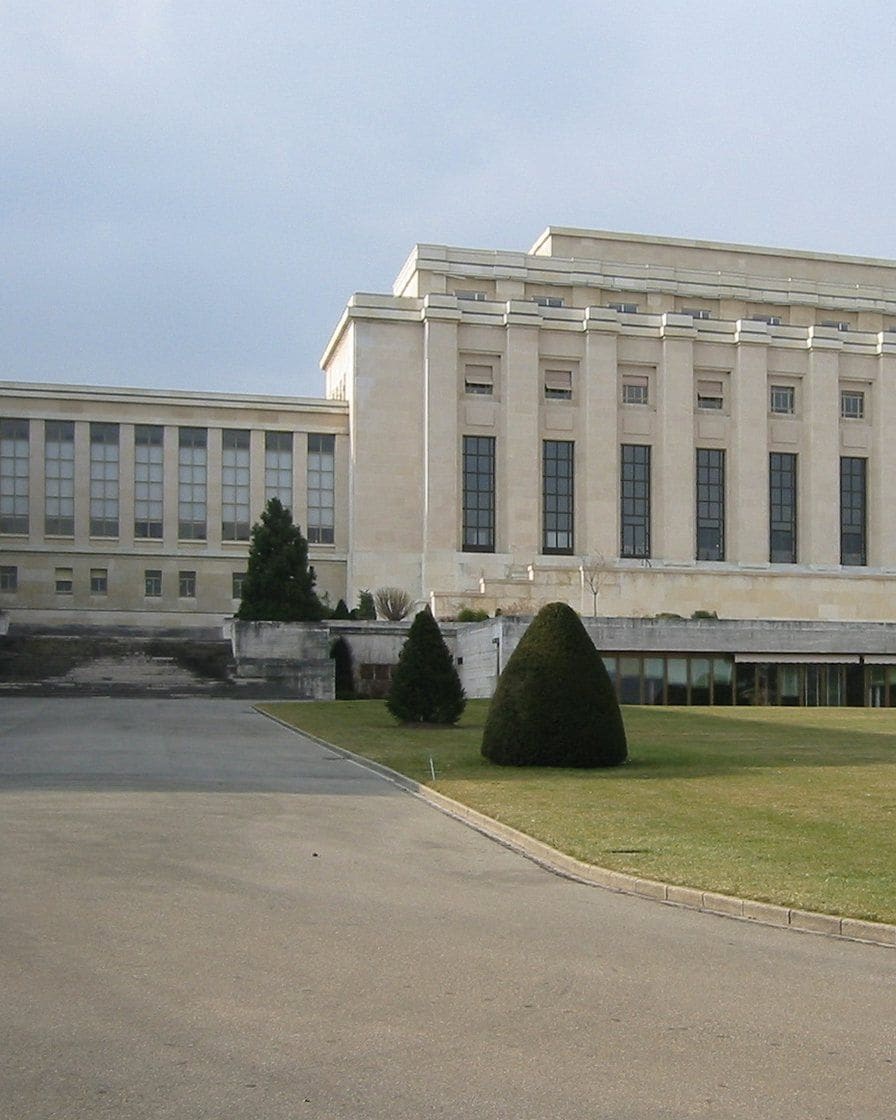
Photo: Yann Forget, CC BY-SA 3.0, via Wikimedia Commons
Each visitor shows a valid passport from a UN member or observer state, or a national identity card from a Schengen state. The document is checked at the entrance: without it, no tour, even with a paid booking.
Each participant also registers to obtain a digital badge with a QR code, compulsory from the age of 14. Report to the meeting point 30 minutes before the tour, for the security check and the transfer to the visitor centre.
Visitors enter mainly through the Pregny gate, but the address given in your confirmation is the reference. The rules on bags, cameras and prohibited items are not all published: read those attached to your booking.
What do you see during the tour?
Institutional rooms, with explanations about the League of Nations, the UN and the major international conferences. The tour fascinates anyone interested in diplomacy, international law or the architecture of the League of Nations era.
It disappoints anyone hoping to see the bustling behind-the-scenes life of the UN. The route adapts to conferences, security and the day's activity, and no list of closures linked to meetings is published: a confirmed booking does not guarantee that all the usual rooms will be open.
In which language?
Tours can be held in English, French, German, Italian, Spanish, Russian, Dutch, Greek, Danish, Czech, Slovak or Bulgarian. Individual visitors join a mixed group: the language depends on the slot, and not speaking French is no obstacle if there is a slot in a language you understand.
How much time should you allow, and at what time?
Thirty minutes early, an hour's tour, fifteen to thirty minutes on the Place des Nations: set aside two hours for the Palais alone, without stress. The first slot of the morning limits the risk of a knock-on delay after a check or a change of programme.
Never schedule the tour just before a train, a flight or a non-changeable booking. The visitor service gives office hours of 10am to noon and 2pm to 4pm, which are not open entry times.
Is the Broken Chair worth the detour?
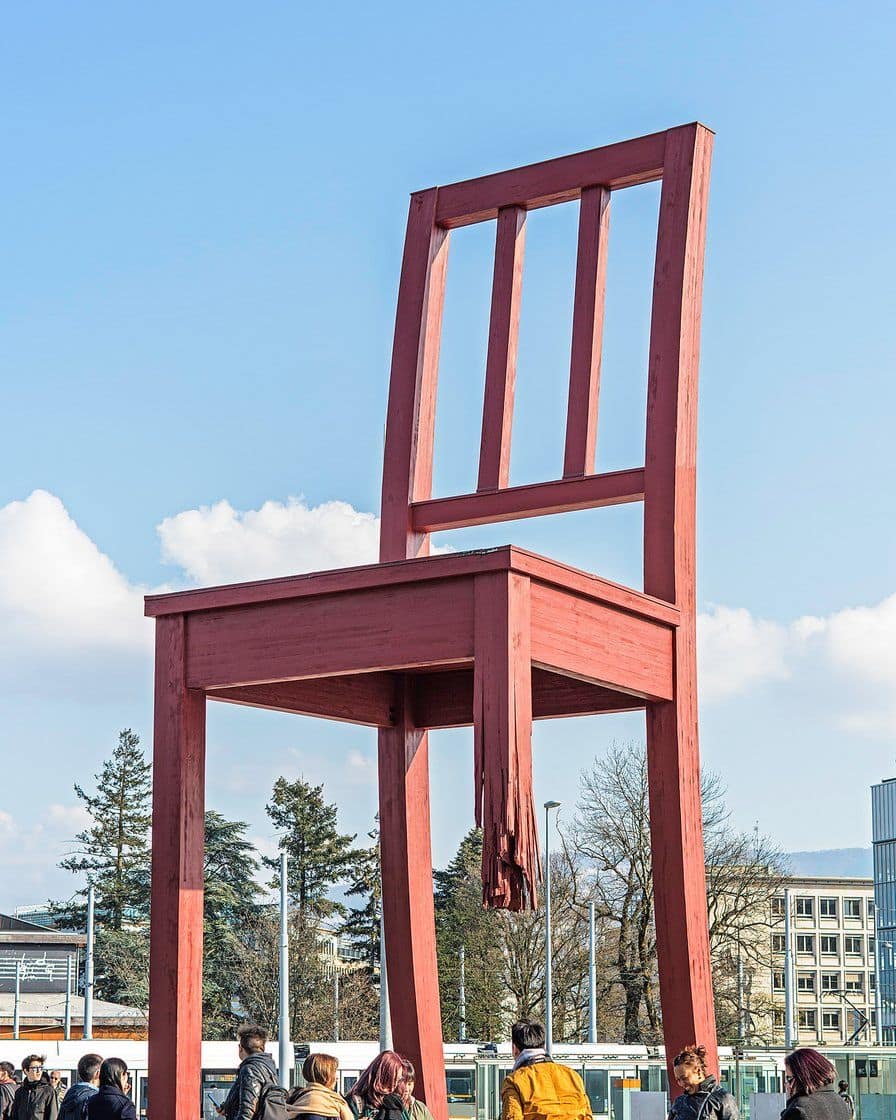
Photo: Markus Schweizer, CC BY-SA 4.0, via Wikimedia Commons
It deserves a stop, not a trip of its own. Standing on the Place des Nations, it is a monumental work and a symbol of the fight against anti-personnel landmines and cluster munitions. At a glance, it gives you the measure of International Geneva.
But the stop takes a few minutes, on an urban square exposed to traffic, demonstrations and sometimes works. The walk around the flags helps you understand the setting; it does not replace the inside.
What else can you see in International Geneva?
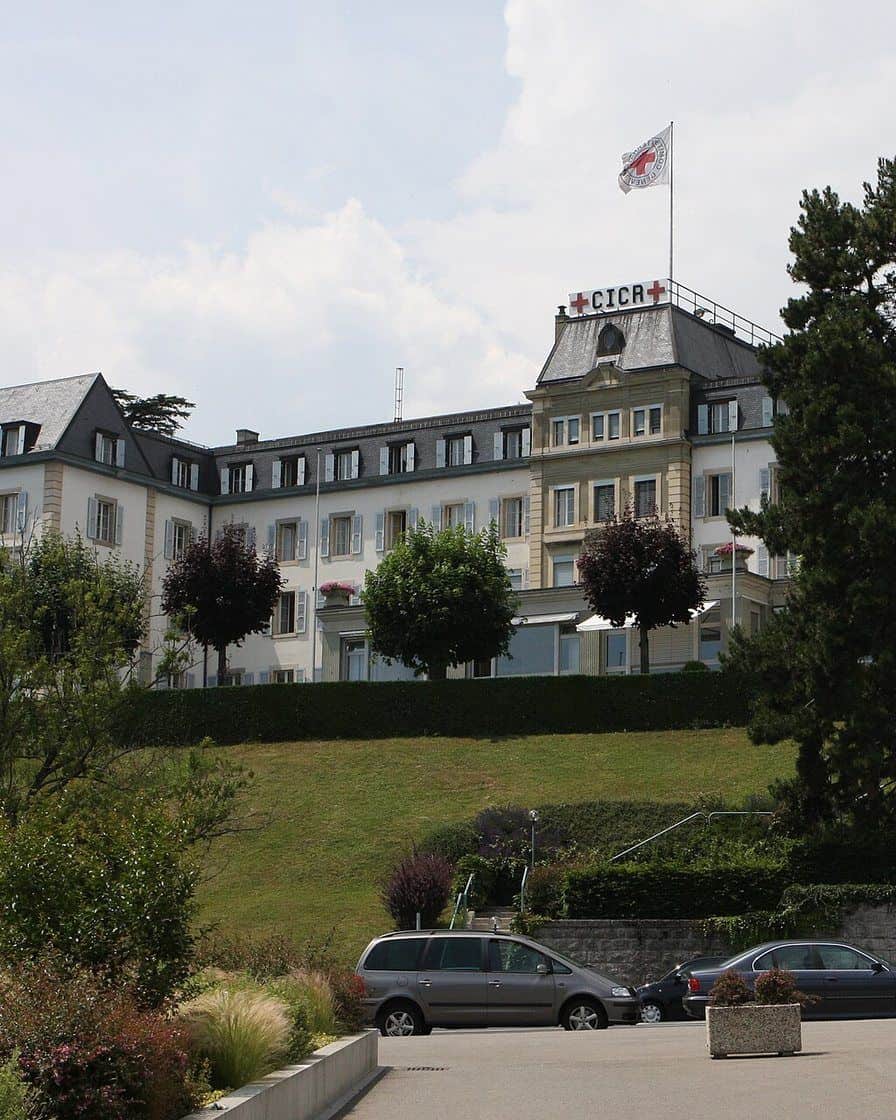
Photo: Benoît Prieur, CC0, via Wikimedia Commons
The International Red Cross and Red Crescent Museum, near the Pregny gate, is the most natural addition. It brings the human dimension the institutional tour lacks: conflicts, relief, humanitarian law, testimonies. Allow 1 hr 30 min to 2 hours. The Palais ticket does not give access, and its prices and opening hours should be checked on its website.
The Musée Ariana, devoted to ceramics and glass, opens from 10am to 5pm Tuesday to Sunday, at 14 CHF, free up to the age of 25 and on the first Sunday of the month. It can be visited without a badge or security check, in 1 hour to 1 hr 30 min: you choose it for its collections, not as a substitute for the UN.
The Maison de la paix will interest those who want to understand the ecosystem of diplomacy and mediation. It is not a museum with free entry: the accessible spaces vary with events.
The half day we recommend
- the Place des Nations and the Broken Chair;
- the guided tour of the Palais, in the first slot;
- the Red Cross Museum, right next door;
- lunch, then the Musée Ariana if you still have the energy.
Tram 15 runs to the Nations terminus from the centre (tpg lines), and the district is located on the map of Geneva. The city's other museums are compared in Geneva's museums.
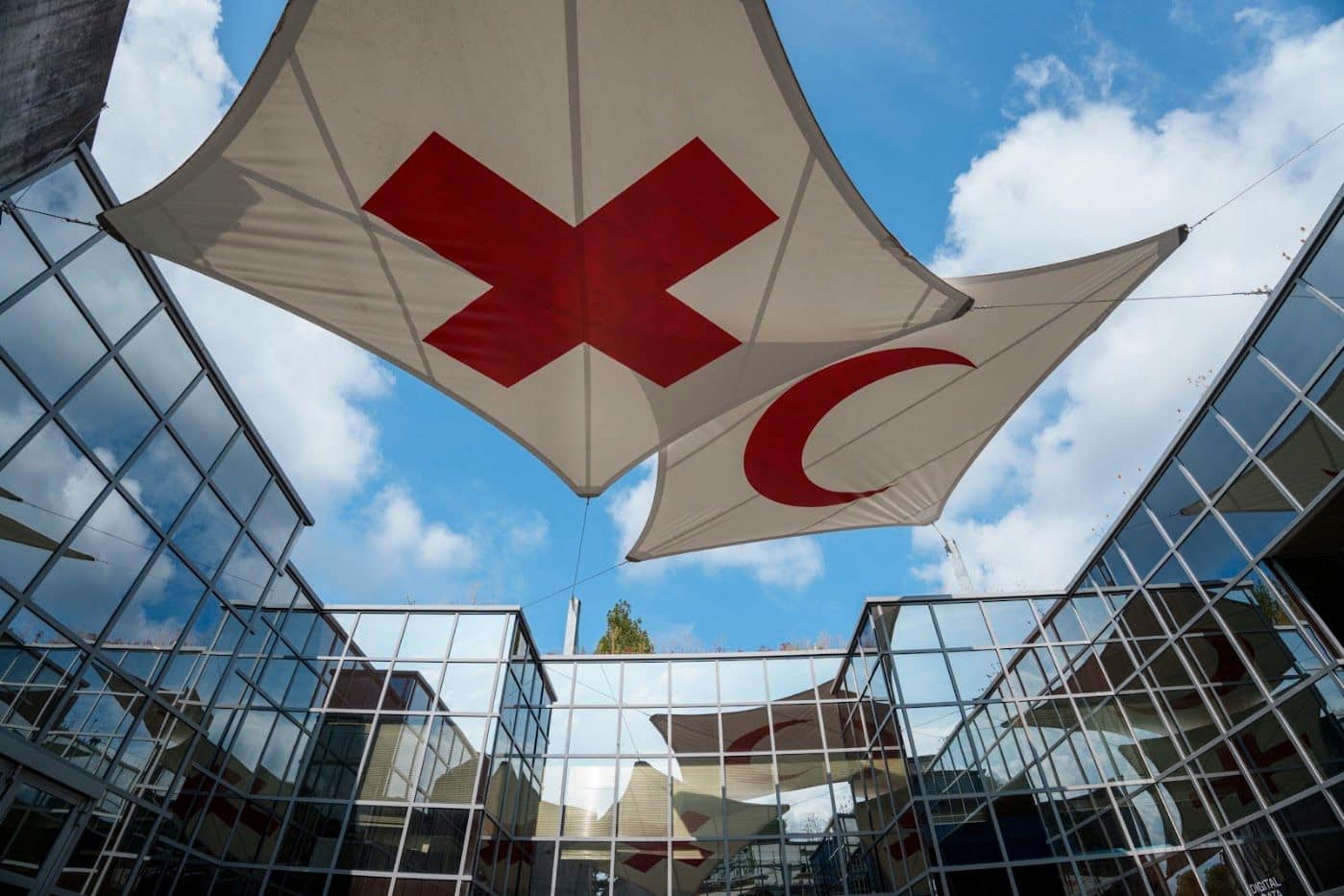
Red Cross Museum★ 4,5 · 2,753 reviews
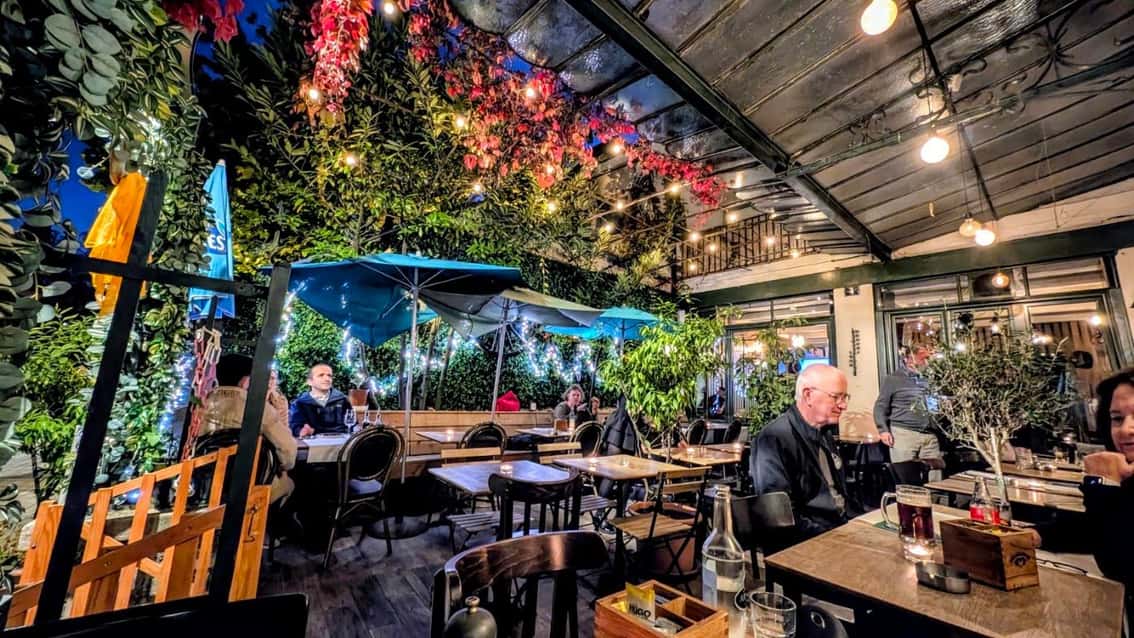
Café du Soleil★ 4,5 · 3,369 reviews
International Geneva with a guide. Tours of the international organisations district and the city leave from the centre. Our partner's Geneva page brings together the tours available; they do not replace booking the Palais on the UN website.
See tours in Geneva →Partner link: booking through this link supports the site at no extra cost to you.How do you fit it into a stay?
International Geneva is one of the outlying areas we suggest for day two of our weekend and of Geneva in three days. In a single day, however, it is incompatible with the full tour of the centre (Geneva in one day).
It combines poorly with CERN on the same day: each needs half a day and a journey (visiting CERN). With teenagers, the guided tour has a youth rate; younger children will prefer the Ariana or the lake (Geneva with children). For the rest of the programme, see things to do in Geneva.
The Nations district on foot. Right-bank hotels, between Cornavin and Pâquis, are a few stops from tram 15. This link opens Geneva hotels for the next weekend; the hotel's transport card covers the journey.
See hotels in Geneva →Partner link: booking through this link supports the site at no extra cost to you.Sources
Sources: UN Geneva (visiting; FAQ on booking, groups, access badge, visitor access; contacts), Geneva Tourism (guided tour of the Palais des Nations; Musée Ariana; parks and gardens; museums).
The amount of the platform fees is not published. The prices of the Red Cross Museum and the Maison de la paix are not in our sources. Research carried out on 22 October 2026.
Frequently asked questions
Can you visit the UN in Geneva?
When should you book a tour of the Palais des Nations?
Which ID do you need to visit the UN?
How much does the UN tour cost for a child?
Where is Geneva's Broken Chair?
Mathieu Jaquet
Mathieu guided groups through the Old Town for seven years, from St. Pierre Cathedral to the Bastions. He builds his routes on foot, stopwatch in hand, and cuts whatever does not fit into a real day. He would rather write that a visit is not worth the ticket than pad out a list.