Geneva in three days: the full itinerary, with a day trip and the fair in April
Two days are enough for Geneva's main sights; the third goes to watchmaking or a day trip. The day-by-day itinerary, the April version with Watches and Wonders, walking distances, the closures that wreck a programme and what to drop first.
How many days do you need in Geneva? For a first stay, two days cover the main sights. The third changes the nature of the trip: you give it to watchmaking, or to a day trip on Lake Geneva or into the Alps.
Here is the three-day itinerary we recommend, with an April version built around Watches and Wonders. The durations are our planning times: official sites publish their opening hours, almost never the time actually spent in queues, climbs and breaks.
How many days should you plan in Geneva?
| Duration | What is realistic |
|---|---|
| 1 day | the Old Town, the cathedral, the quays and the Jet d'eau, with no in-depth museum (Geneva in one day) |
| 2 days | the main districts, a museum or a watch visit, the lake and the parks (the weekend) |
| 3 days | Geneva without rushing, plus the fair or a day trip |
| 4 days or more | a more distant day trip, extra museums, the vineyards or the lakeside villages |
The historic city is compact and can be explored on foot; transport becomes necessary for Palexpo, the Botanical Garden, Carouge, the Salève and day trips. The danger is not distance but piling up visits whose opening hours do not match.
Day 1: the Old Town, the shop windows and the lake
Morning: from Cornavin to the Maison Tavel
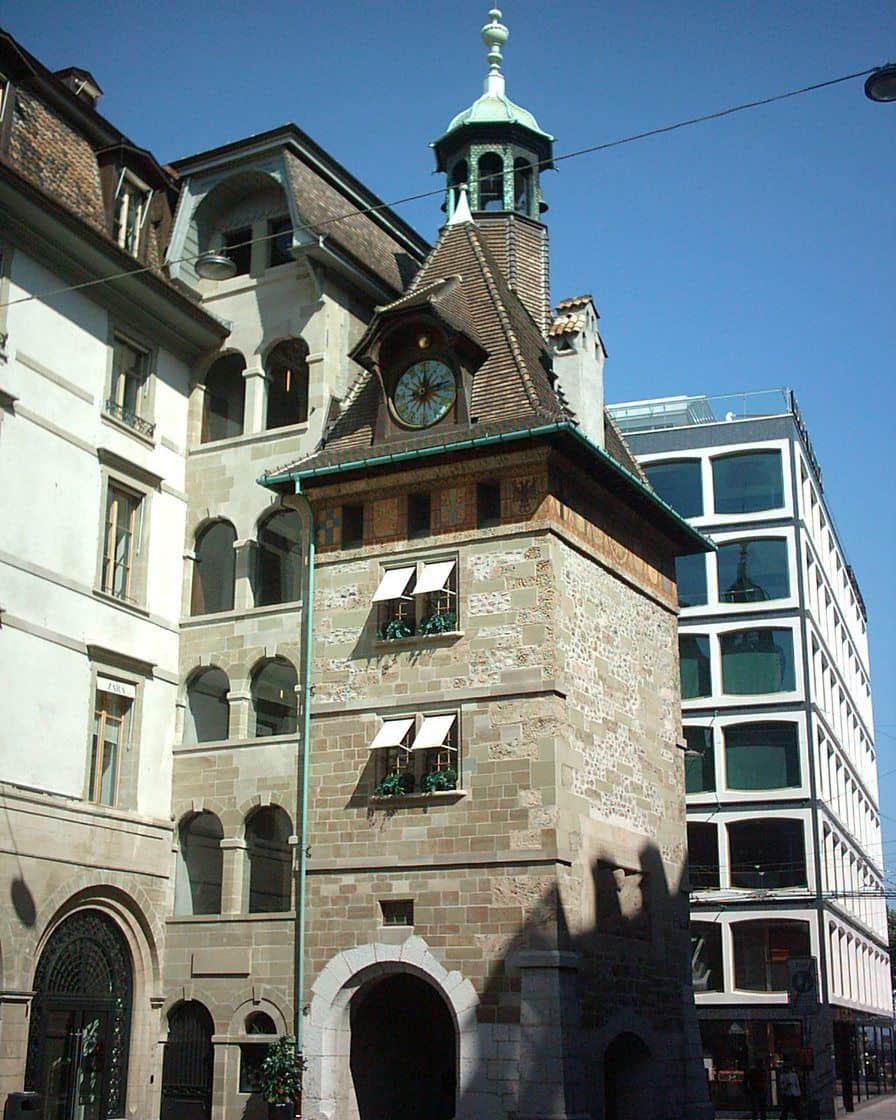
Photo: Mourad Ben Abdallah, CC BY-SA 3.0, via Wikimedia Commons
- Cornavin to Place du Molard: about 1.1 km, 15 to 20 minutes on foot.
- Molard to St Pierre Cathedral: 700 m, 10 to 12 minutes, uphill.
- The cathedral and its towers: 60 to 90 minutes, including the queue and the climb up the 157 steps. The nave alone takes 30 to 40 minutes.
- Cathedral to Maison Tavel: 250 m, 4 to 5 minutes.
- The Maison Tavel: 45 to 75 minutes for the city's history and its large model, open from 11am to 6pm Tuesday to Sunday.
The Old Town looks like a compact stop; in practice, give it 3 to 4 hours with photos, breaks and the towers. The full route around the hill is in the Old Town on foot, and everything the cathedral hides on our St Pierre page.
Afternoon: from the Bastions to the Jet d'eau
- Maison Tavel to Parc des Bastions: 700 m, 10 minutes; 30 to 45 minutes in the park and in front of the Reformation Wall.
- Place Neuve to Rue du Rhône: 10 to 15 minutes, then 45 to 90 minutes in front of the watch shop windows. Fine watchmaking boutiques may require an appointment or a longer welcome than a simple visit.
- Lower town to the Jardin Anglais and the Flower Clock: 10 to 15 minutes.
- Jardin Anglais to the Jet d'eau: 1.2 to 1.5 km, 20 to 30 minutes, then 45 to 75 minutes on the jetty and the quay.
The sequence works very well on foot, but it is not "direct": detours, roadworks and photo stops easily stretch it to three hours. What the Rue du Rhône boutiques are worth, and whether a watch costs less there than at home, is in watchmaking in Geneva.
Evening: Eaux-Vives or Carouge
Eaux-Vives is 15 to 25 minutes on foot from the Jet d'eau. Carouge, 2.5 to 3 km away, is better reached by tram, or 35 to 45 minutes on foot. With dinner, allow two to three hours.
If the day overflows, drop the cathedral towers or the shop windows. Never the journey time to Palexpo the next day, if you are coming for the fair: that is the fixed point of the stay.
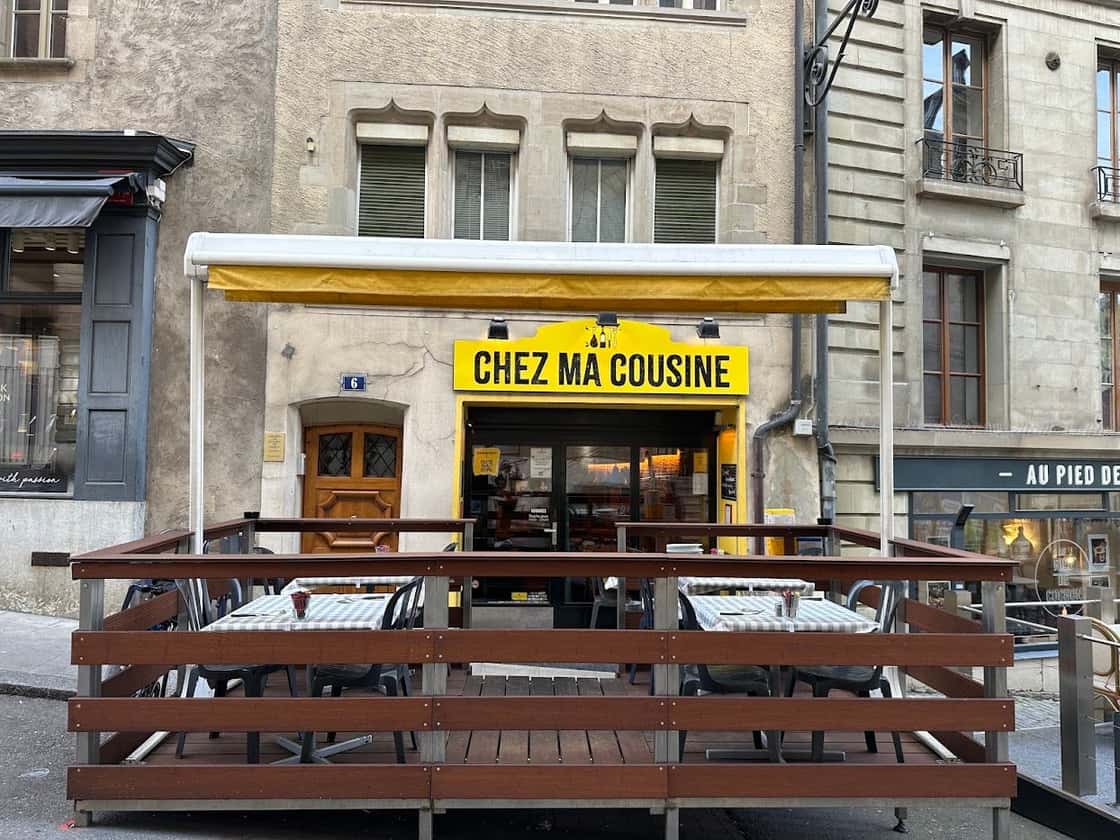
Chez ma Cousine★ 4,4 · 2,513 reviews
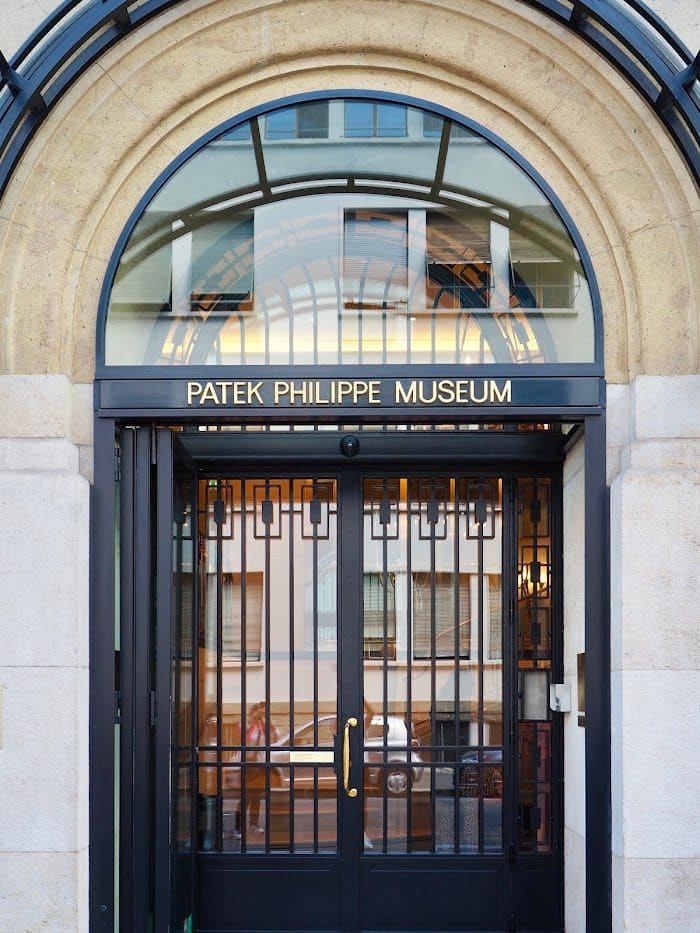
Patek Philippe Museum★ 4,5 · 3,772 reviews
Day 2, in April: Watches and Wonders at Palexpo
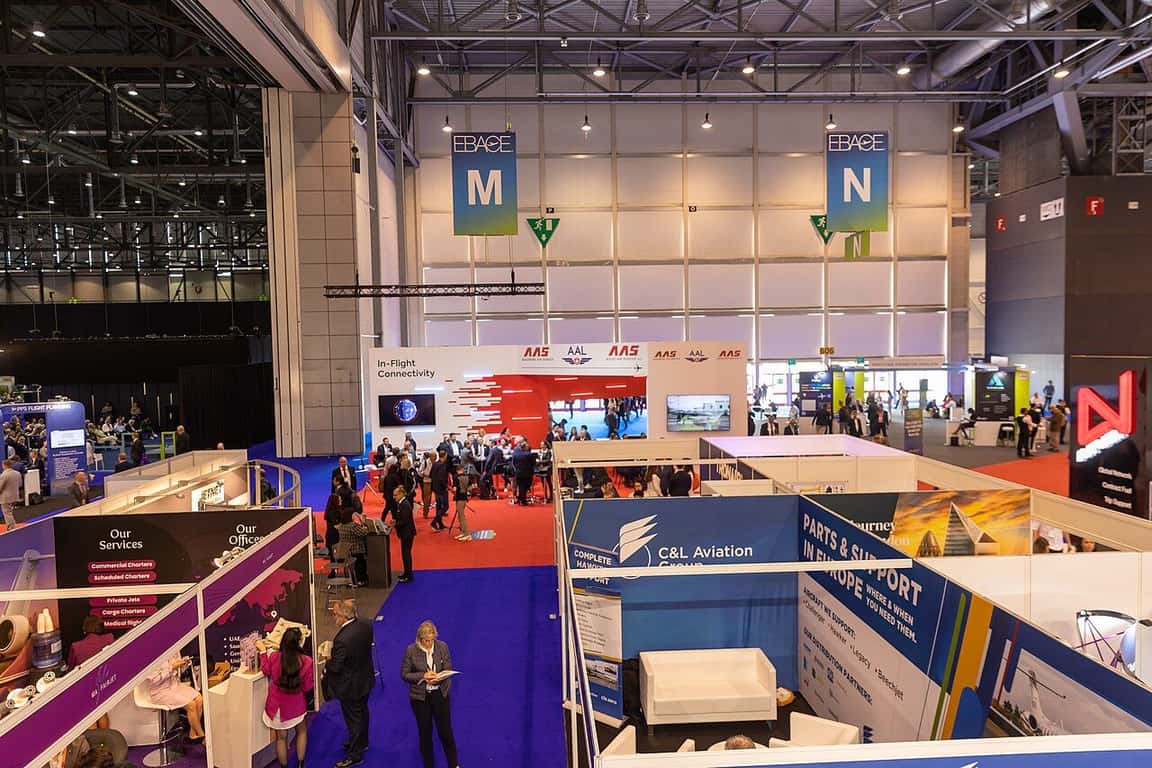
Photo: MB-one, CC BY-SA 4.0, via Wikimedia Commons
The 2027 edition runs from 5 to 11 April 2027, with public access announced from 9 April 2027. Tickets are bought online, and the time slot governs the whole day: build the rest of the stay around it, never the other way round.
Palexpo is next to the airport: the train gets there from Cornavin in 6 to 7 minutes. Add 15 to 30 minutes for walking, finding your way and security, and arrive 30 to 45 minutes before your slot on public days.
A visit you can make the most of needs 5 to 8 hours; a short version, focused on a few brands, rarely goes below 3 hr 30 min to 4 hours. The 2026 edition welcomed 60,000 visitors, compared with 55,000 in 2025, according to the organisers' press releases, which do not always measure the same thing.
Our order of visit
- arrive early, before peak crowds;
- start with the brands and demonstrations that really interest you;
- take a break halfway through;
- do not schedule any museum with fixed hours after the fair;
- keep the evening for events in town, or for resting.
The events in the city centre have neither the same capacity nor the same access: a free event does not mean immediate entry. Tickets, public days and opening hours are in our Watches and Wonders 2027 guide.
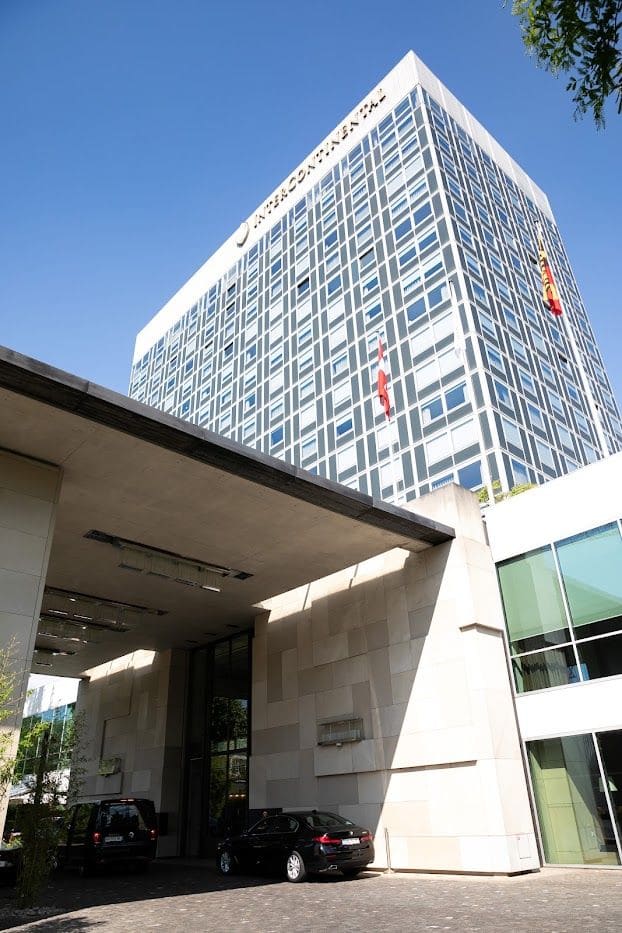
InterContinental Geneva★ 4,6 · 2,602 reviews
Three nights during Watches and Wonders: it is the most expensive week of the year in Geneva, and cancellable rooms go first. This link opens hotels for the fair dates.
See hotels for the fair dates →Or the public weekend, from 9 April 2027 →Partner link: booking through this link supports the site at no extra cost to you.Day 2, the rest of the year: International Geneva or CERN
Outside the fair, day two goes to one area away from the centre, just one. Two solid choices:
International Geneva. Tram 15 takes you to the Nations terminus. The Palais des Nations can only be visited on a booked guided tour, at 25 CHF, with a passport or ID card, and slots for the following month open on the 20th of each month. Add the Red Cross Museum and the Musée Ariana. Everything is in visiting the UN.
CERN. In Meyrin, at the end of tram 18. The exhibitions are free, guided tours are booked weeks ahead, and the LHC tunnel remains closed until 2028. See visiting CERN.
In the afternoon, head back to the centre for a museum, checking its closing day: the Museum of Art and History opens from 11am to 6pm Tuesday to Sunday. Our pick of the museums worth the detour is in Geneva's museums.
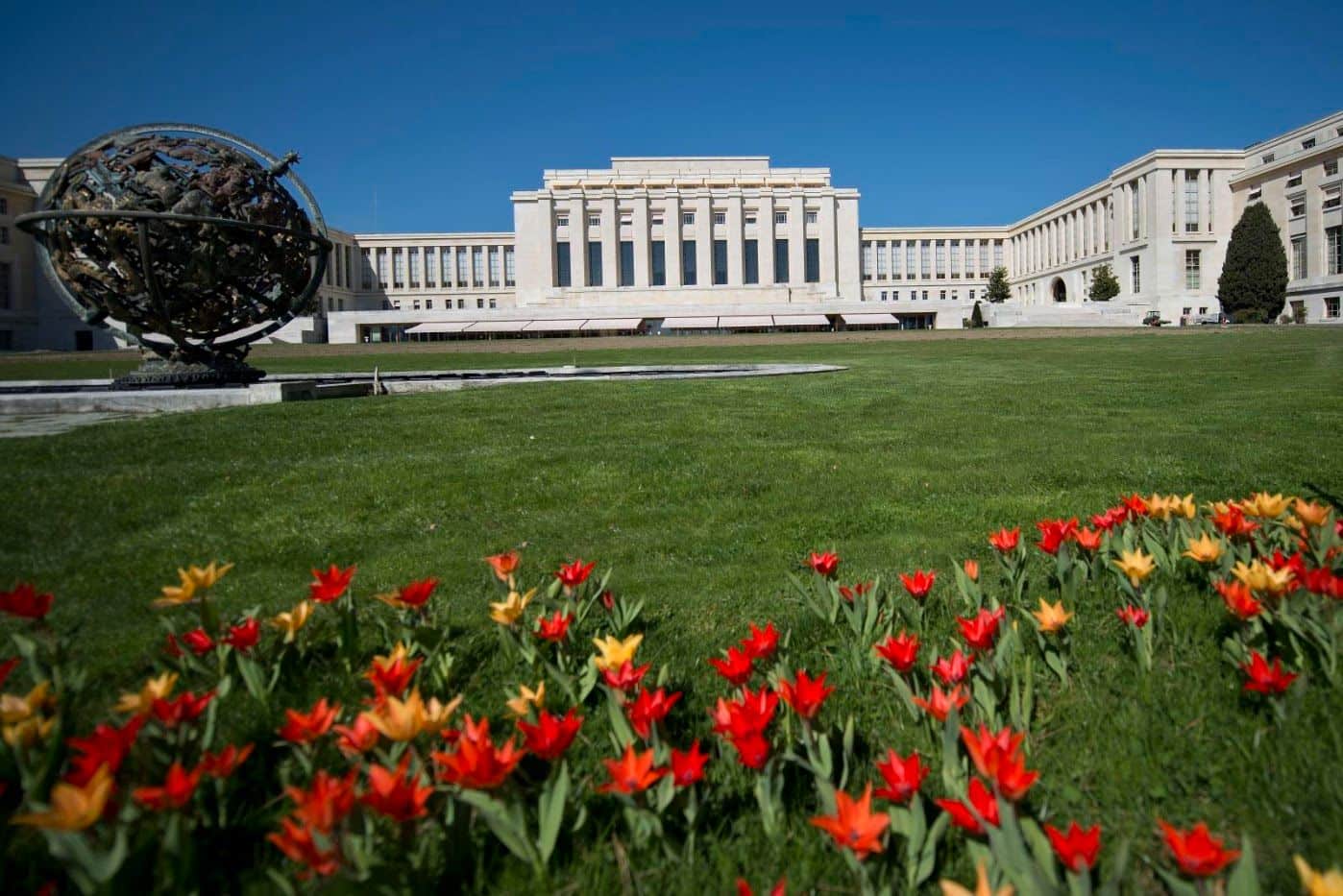
Palais des Nations★ 4,6 · 4,456 reviews
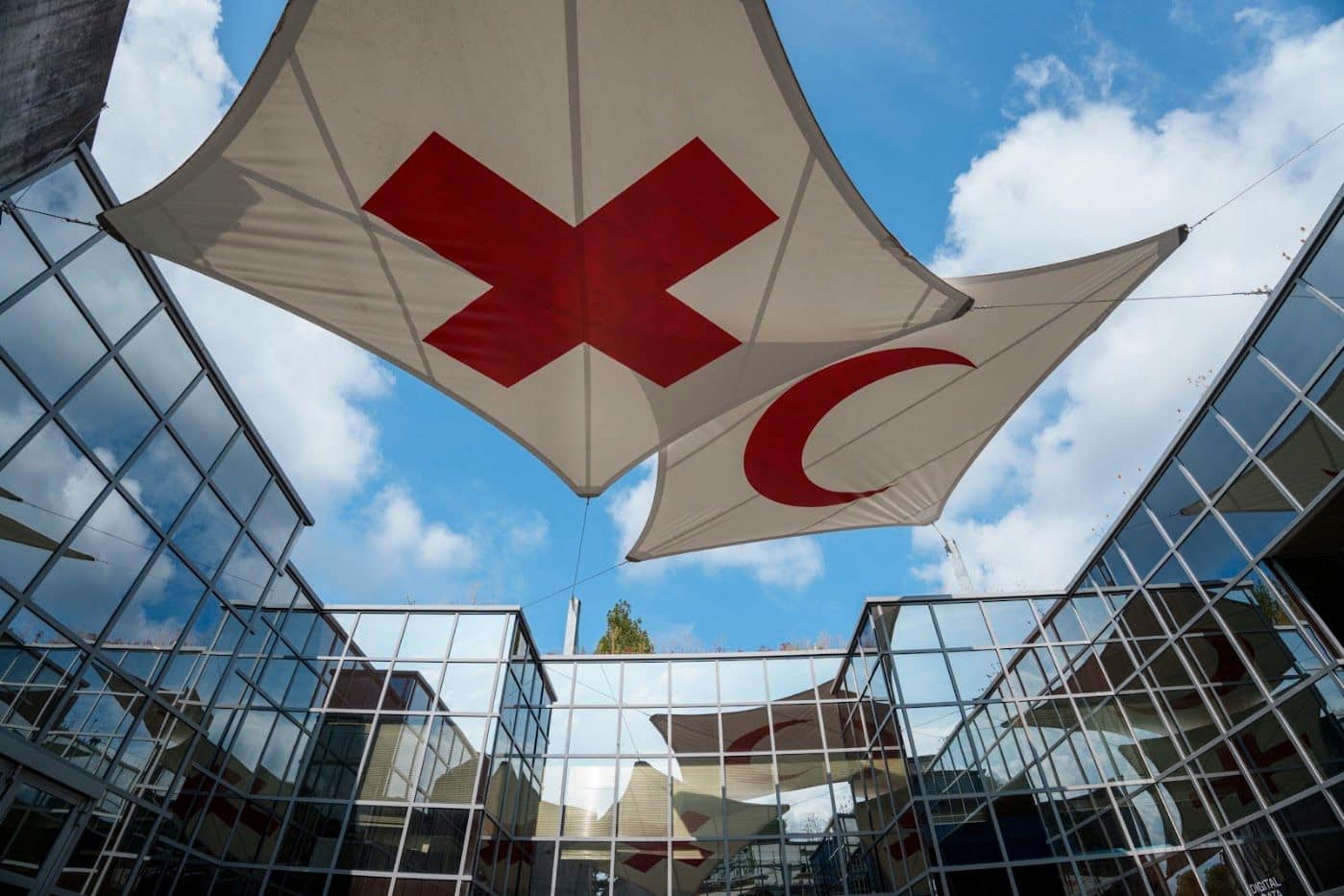
Red Cross Museum★ 4,5 · 2,753 reviews
Day 3: Lausanne and Lavaux
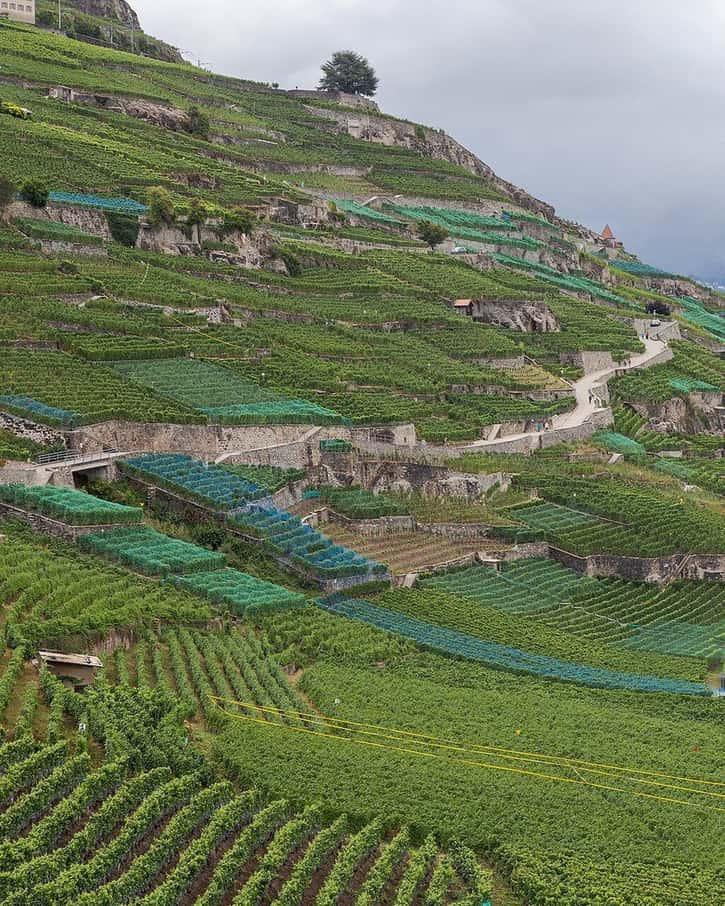
Photo: JoachimKohler-HB, CC BY-SA 4.0, via Wikimedia Commons
Lausanne is the most robust day trip without a car: a direct train, and a return that depends on neither a boat nor the weather. The train links the two cities in 39 to 52 minutes.
- Lausanne station to the old town and cathedral: 15 to 25 minutes on foot, steeply uphill.
- Old town, cathedral and viewpoints: 2 to 3 hours.
- Lausanne to Lavaux: 15 to 25 minutes by train to a suitable station, then walking.
- Lavaux: 2 to 4 hours for a short to medium walk through the vines.
- Back to Geneva: 1 hour to 1 hr 30 min depending on your starting point.
The day lasts 8 to 10 hours door to door. Choose between Lausanne and Lavaux, or accept a dense day. Adding Chillon Castle on the same day is the classic mistake, turning a day of landscapes into a string of platforms. The journey is detailed in from Geneva to Lausanne.
Other possible day trips
- Montreux and Chillon: 1 hr 15 min to 1 hr 45 min by train each way, 1 hr 30 min to 2 hr 30 min at the castle. Realistic together, not with Lausanne.
- The boat: tempting in fine weather, but less flexible than the train. A scenic excursion, not a way to see several towns (boat trips on Lake Geneva).
- Annecy, an hour away by bus (from Geneva to Annecy), or Chamonix, more fragile (from Geneva to Chamonix).
- In winter, a day's skiing with an early start (skiing from Geneva).
The nine one-day destinations are compared in day trips from Geneva.
Which closures can wreck the programme?
| Stop | The risk | The workaround |
|---|---|---|
| Watches and Wonders | public access on certain days only, variable opening hours | build the stay around the ticket |
| Geneva museums | a closing day, often Monday, not always | check each venue |
| St Pierre Cathedral | services, separate hours for the towers | do not confuse an open church with accessible towers |
| Jet d'eau | wind, frost, maintenance | see the lake without making it the sole objective |
| Boats | seasonal timetable, reduced frequency out of season | do not rely on a boat for the return |
| Salève cable car | maintenance from 2 to 26 November 2026 | plan an alternative |
No centralised list of exceptional closures is published: works, ceremonies or security restrictions are often discovered the day before. Check the Jet d'eau, the towers, the boats and mountain facilities on the day.
What if it rains, if it is hot, or in winter?
Rain: replace the walks with the Museum of Art and History, the Red Cross Museum, CERN if booked, and watch visits. Keep the Old Town for short spells between showers.
Heat: the hill early, the quays at the end of the day, Lavaux never in mid-afternoon. Terraces and boats are packed on summer weekends.
Winter: short days limit Lavaux and the viewpoints. Prefer Lausanne, the museums and watchmaking, and keep the lake for the hours of daylight. The best seasons are compared in when to go to Geneva.
The mistakes that ruin a three-day stay
- Scheduling the fair in the morning and a day trip in the afternoon.
- Doing Lausanne, Lavaux, Montreux and Chillon in one day.
- Confusing time on board with door-to-door time.
- Forgetting the climb to the cathedral and the security checks at Palexpo.
- Putting a museum on a Monday without checking whether it is closed.
- Booking a distant restaurant after an activity with an uncertain finishing time.
- Using a boat as your main transport out of season.
- Believing that a ticket or a City Pass removes queues and bookings.
When you have to cut, drop the Salève first, which adds a journey, a dependence on visibility and a risk of closure (the Salève). Then a second museum, then Carouge if watchmaking is your priority. Never the fair, the chosen day trip or the transport margins.
How much does this stay cost?
Accommodation dominates: a Geneva three-star asks 130 to 220 CHF a night outside the fair, and much more during Watches and Wonders week. In return, your hotel gives you the Geneva Transport Card, which makes trams, buses, trains and Mouettes free within the canton, but not the train to Lausanne.
The Geneva City Pass costs 50 CHF for 72 hours according to one column of the official price list, 65 CHF according to the other. It only pays off if you really pack in paid activities, as explained in our comparison of passes.
Three nights in Geneva outside the fair: a hotel near Cornavin puts Lausanne less than an hour away and the centre within walking distance, and the free transport card covers the city. This link opens Geneva hotels for the next weekend.
See hotels in Geneva →Partner link: booking through this link supports the site at no extra cost to you.Sources
Sources: MySwitzerland (Watches and Wonders 2026), Palexpo (Watches and Wonders Geneva), Watches and Wonders (2026 event, press release of 5 February 2026), Richemont (opening of the 2026 edition), Geneva Tourism (Watches and Wonders in the city, Geneva City Pass, attractions), Orange Travel (things to do in Geneva), and our Lausanne and day trip pages for day three.
Durations of stops, visits and day trips are planning times, not official statistics. Attendance figures for the fair come from the organisers' press releases. Research carried out on 22 October 2026.
Frequently asked questions
How many days do you need to visit Geneva?
What should you do in Geneva in three days?
How much time should you allow at Watches and Wonders?
Can you do Lausanne and Lavaux as a day trip from Geneva?
Should you buy the Geneva City Pass for three days?
Mathieu Jaquet
Mathieu guided groups through the Old Town for seven years, from St. Pierre Cathedral to the Bastions. He builds his routes on foot, stopwatch in hand, and cuts whatever does not fit into a real day. He would rather write that a visit is not worth the ticket than pad out a list.